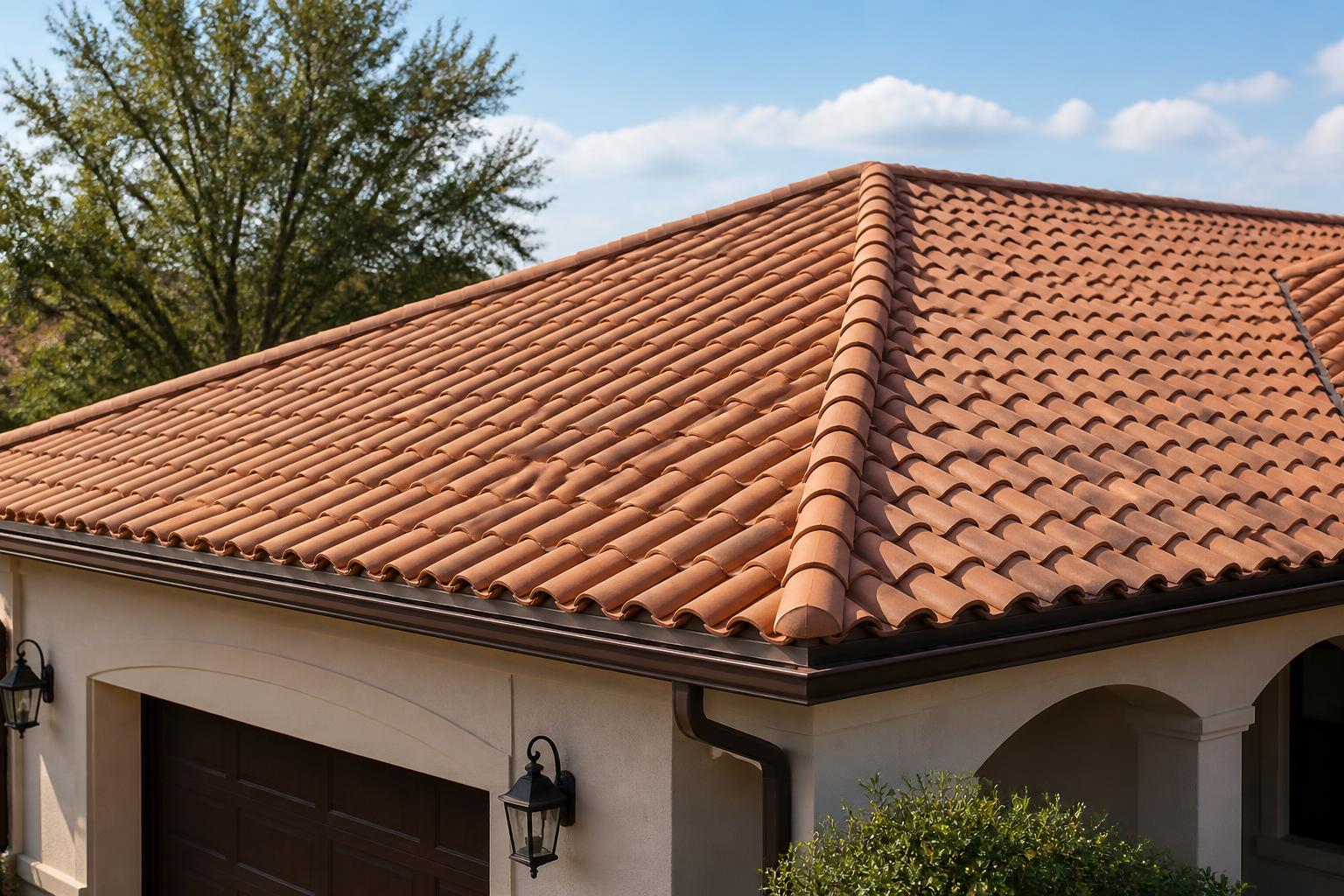
Cracked tiles, slipped pieces, or a ceiling stain after a storm are signs your roof needs attention now. If your tile roof has started shedding debris, letting water into the attic, or showing gaps along the ridges, the safest next step is a thorough inspection and a clear repair plan.
Diego's Roofing Corp. helps property owners across Costa Mesa, CA restore tile roofs before small damage turns into larger structural trouble. We inspect the roof surface, underlayment concerns, flashing, and weak areas around penetrations so you know what is worn, what can be repaired, and what should be replaced.
Tile roofs are durable, but they still need focused care when pieces crack, shift, or loosen. Even one damaged section can allow water to reach the layers below. Because tile systems are built with overlapping parts, a problem may show up away from the actual source.
Homeowners often call after noticing stains, a musty attic smell, loose shards near the driveway, or a roofline that looks uneven from the street. These signs do not always point to a full replacement, but they do mean the roof should be checked before moisture spreads.
Some tile roofs only need targeted repairs. Others need a wider fix because the damage sits under the tiles where it is harder to see. At Diego's Roofing Corp., we look at the full roof assembly so the repair matches the real condition of the roof.
Depending on what we find, a tile roofing service may involve replacing broken tiles, correcting loose sections, improving flashing around vulnerable areas, or addressing decking and underlayment concerns that have been exposed to moisture.
When a tile roof has widespread damage, repeated leaks, or old sections that no longer hold up, replacement can be the smarter path. A roof replacement is not just about new tile on top. It is also about rebuilding the layers below so the roof can handle daily exposure and protect the structure beneath it.
We work with tile roofing for residential, commercial, and HOA properties throughout Costa Mesa, CA. If replacement is the right answer, we help you compare the condition of the roof, the areas that can still be salvaged, and the sections that should be rebuilt now rather than patched again later.
A careful inspection is the starting point for any tile roofing project. Without it, it is easy to fix the visible tile while missing the hidden cause beneath. Diego's Roofing Corp. offers complimentary inspections and free quotes, which helps you understand the roof's condition before deciding on repairs or replacement.
During the inspection, we look at roof tiles, valleys, flashing, penetrations, drainage points, and signs of hidden wear. We also consider whether decking, wood replacement, waterproofing, or related exterior work may be needed to support the roof system.
Tile roofing is not one-size-fits-all. Different tile materials and profiles change the look of a property and affect the way the roof sheds water. We work with a range of roofing materials, including tile systems, and help homeowners choose a solution that suits the structure and its current condition.
Some tile roofs are built for a clean, traditional appearance. Others have a more textured profile. What matters most is that the roof is installed and repaired with attention to alignment, fastening, drainage, and the hidden layers below the tile.
Tile roofs can hide water problems longer than many homeowners expect. A tile may look intact from the ground while water is getting through a broken seal, a shifted overlap, or a weak point beneath the surface. That is why visible tile damage and interior staining should never be ignored.
When leak-related damage is found, we may recommend wood replacement, decking repairs, or waterproofing work along with the tile repair. This helps address not just the symptom, but the area that allowed water to travel into the roof assembly.
Tile roofing often connects with other exterior services. A roof does not stand alone, and details around drainage, skylights, and surface protection can affect how well tile performs over time. When needed, Diego's Roofing Corp. can coordinate the roof work with related improvements so the system works as a whole.
That may include gutter installation, roof washing, skylight or solar tube work, or waterproofing around sensitive sections. These services can be helpful when the roof needs more than a simple tile swap and the surrounding areas also show wear.
Homeowners often want a clear process, not a confusing sales pitch. When you contact Diego's Roofing Corp. about tile roofing, we start by listening to the symptoms you have noticed, then we inspect the roof and explain what is happening above and below the tile.
From there, we outline the next step with straightforward communication. If a repair will solve the problem, we say so. If the roof has moved beyond patchwork, we explain why replacement may be the more practical route. The goal is to give you useful information so you can make the next decision with confidence.
If you see cracked or shifted tiles, ceiling stains, or loose pieces near the roofline, the roof should be inspected. Tile damage is not always obvious from the ground, so a closer look helps find the source.
Yes. One broken or displaced tile can expose the layers below and let water reach the roof assembly, especially if the underlayment or flashing also has wear.
No. Some leaks can be corrected with targeted tile repair, flashing work, or underlayment-related fixes. A full replacement is usually considered when damage is broad or repeated.
When possible, we look for a replacement tile that blends with the existing roof. Matching depends on the tile style, profile, color, and current condition of the roof.
Common trouble areas include valleys, roof edges, penetrations, flashing, and sections where tiles have shifted or broken. These areas deserve close inspection because water often enters there first.
Yes. Even when the damage seems minor, a roof inspection can reveal hidden wear beneath the tile. That helps you decide whether a simple repair or a larger project makes more sense.
If your tile roof has cracks, leaks, or signs of hidden wear, Diego's Roofing Corp. is ready to take a close look and explain the next step. We serve Costa Mesa, CA and nearby communities throughout Orange County with roof installation, roof repair, roof replacement, roof inspection, and related tile roofing work.
Call +1 949-903-3723 or visit us at 610 Joann St, Costa Mesa, CA 92627 to request your inspection and free quote. A careful review today can help you avoid bigger roof problems later.